MTR-1
Apollo MTR-1 Multi-Target Radar Multisensor (Base)
SG Seller, Ready Stock in Singapore
Buy on Shopee → Set-up guide and documentation (Apollo wiki) →Overview
The MTR-1 is a radar sensor that reports where people are in a room. Its HLK-LD2450 mmWave radar tracks up to three moving targets and gives Home Assistant X and Y coordinates for each one. ESPHome is flashed at the factory. This is the Base variant.
Next to the radar sit an LTR-390UV sensor for ambient light and UV, one RGB LED and a piezo buzzer. The sensor works entirely within your local network through Home Assistant and ESPHome, with no cloud access and no subscription.
What the Radar Reports
Each target comes with X and Y coordinates, speed, angle, distance and direction. You define up to three zones from Home Assistant and build automations on the zone someone is in: at the hob, at the sink, on the sofa, at the desk.
Maximum distance is 6 metres, with a 120 degree horizontal and 70 degree vertical field of view. Zones must be squared to the sensor's orientation, so settle the mounting position before you draw them.
Know the Limits Before You Buy
The MTR-1 is a movement and zone tracking sensor.
- Radar sensitivity is not adjustable. The LD2450 cannot be tuned the way the MSR-2's radar can, so you shape detection with zones.
- Apollo rates its still-presence detection as limited. To hold presence on someone sitting motionless, the MSR-2 is the better fit.
- Apollo's own comparison rates tracking of the third target below the first two.
- Fans, swaying curtains, moving air from air-conditioning vents and mirrors can cause false triggers. Plan the mounting position around them.
What Is In the Box, and What Is Not
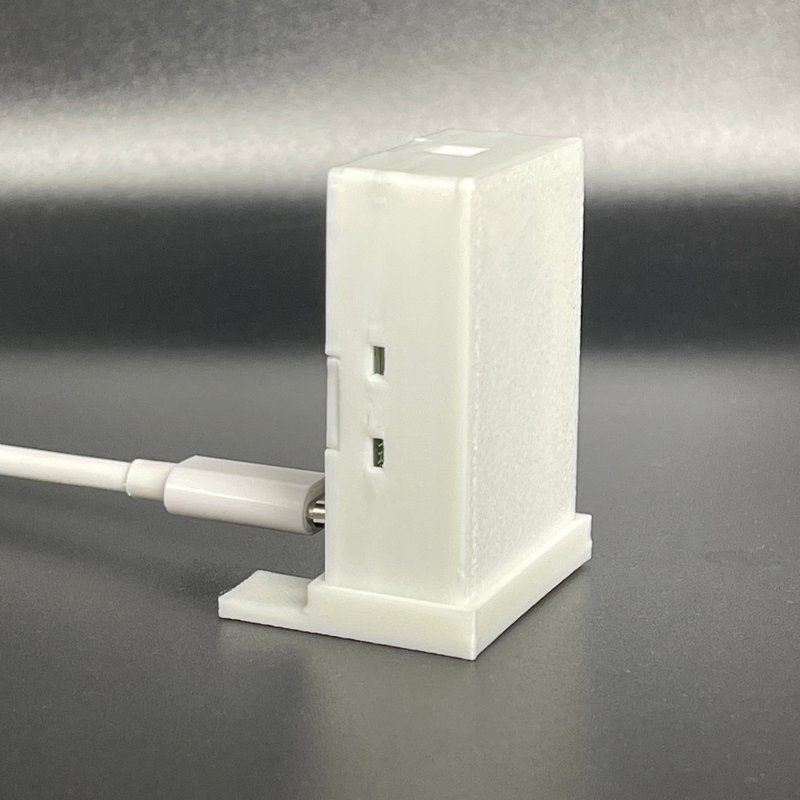
The box holds the assembled MTR-1 in its case. Nothing else is supplied:
- No USB-C cable. The cable in the photograph is not included.
- No power supply.
- No mount and no stand.
You need your own 5 V USB-C power supply and cable. Apollo says the sensor takes under 1 A, so most phone chargers are suitable, and it warns that very cheap chargers have caused problems.
This is the Base variant. It has no CO2 sensor and no humidity sensor. The MTR-1 is for indoor use.
Technical Specifications
| Model | MTR-1, Base variant |
|---|---|
| Radar | HLK-LD2450 mmWave |
| Targets | Up to 3 moving targets |
| Zones | Up to 3, squared to the sensor |
| Range | 6 m maximum |
| Field of View | 120° horizontal, 70° vertical |
| Sensitivity | Not adjustable |
| Light | LTR-390UV ambient light (lux) and UV sensor |
| Indicators | One RGB LED, piezo buzzer |
| Microcontroller | ESP32-C3 |
| Wireless | 2.4 GHz Wi-Fi, Bluetooth |
| Power | 5 V over USB-C. Supply and cable not included. |
| Firmware | ESPHome, preinstalled. Open source, OTA updates. |
| Size | 49 × 32 × 15 mm |
| Use | Indoor |
Home Assistant and ESPHome Set-up
Power the sensor and it opens its own Wi-Fi hotspot. Join the hotspot and enter your Wi-Fi details, or use Improv over Bluetooth from Home Assistant. Home Assistant then finds the sensor through the ESPHome integration, and you add it and assign an area. Zones are set from Home Assistant afterwards.
Apollo publishes the firmware configuration on GitHub, so you can take the device into your own ESPHome set-up and change it. Updates install over the air from a Firmware Update entity in Home Assistant. The sensor can also work as a Bluetooth proxy if you enable that yourself through ESPHome.
Singapore Compliance
The MTR-1 is IMDA-registered equipment, Equipment Registration ESER/26/6081, legally imported into Singapore by 2MAG PTE. LTD. under IMDA Telecommunication Dealer's (Class) Licence DA/26/0184.
SG Seller. Ready Stock in Singapore, on our Shopee store.
There is more about the maker on our Apollo Automation page.
FAQ
Will it detect someone sitting still?
Do not rely on it for that. Apollo rates the MTR-1's still-presence detection as limited. It is built to track people who are moving and to report which zone they are in.
Can I adjust the radar sensitivity?
No. Sensitivity cannot be changed through the ESPHome configuration. You set zones to control what the sensor responds to.
How many people can it track?
Up to three moving targets. Apollo's own comparison rates tracking of the third below the first two.
What do I need to power it?
A 5 V USB-C power supply and a USB-C cable. Neither is in the box.